

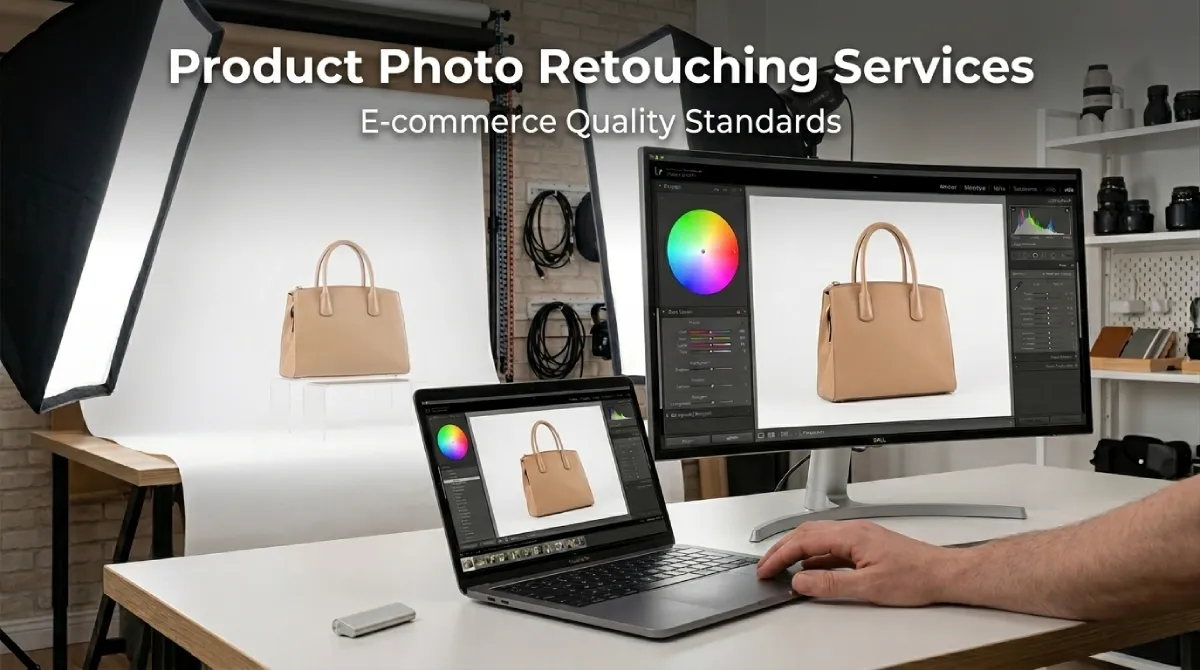
One simple truth about e-commerce is that having great products is not enough. You also need strong visuals. Studies show that nearly 75% of online shoppers rely on product images when making purchase decisions.
The main reason is that visuals strongly influence conversions. High-quality product photos, enhanced through retouching, help eliminate distractions, correct imperfections, and improve overall clarity. This results in clean, consistent, and professional-looking images that better attract and convert customers.
In this article, we will cover everything about product photo retouching services. We will also go through how they are used in e-commerce and clarify the difference between photo retouching and photo editing. You will also gain insights into image requirements across different platforms, along with various retouching services and their estimated pricing for 2026.
Key Takeaways
- Product photo retouching is a core requirement in e-commerce, not just an optional enhancement.
- High-quality visuals strongly influence buying decisions, conversions, and customer trust.
- Clean, consistent, and professionally retouched images improve engagement and reduce product returns.
- E-commerce platforms like Amazon and Shopify require strict image standards, making retouching essential for compliance and visibility.
What Are Product Photo Retouching Services?
Product photo retouching services are part of the post-production editing process. They help create clean and polished product images for e-commerce, advertising, and other marketing materials.
With product retouching, the main goal is to remove anything that may distract or confuse the customer. Background issues, fabric wrinkles, and other small imperfections are cleaned, so the product stays the main focus. This helps present the product in the best possible way while keeping it accurate and realistic.
For most e-commerce businesses, photo retouching is very important. It helps improve click-through rates (CTR), builds customer trust, and strengthens overall brand perception.
Product Retouching vs. Basic Photo Editing
Clear visuals are the most important factor for almost 67% online shoppers. Yet many people struggle to find the difference between editing and retouching, often assuming they mean the same thing.
They often assume they are the same, but in professional workflows, they are different. In simple terms, basic editing is about preparing an image. Here are the key differences between product photo retouching and basic photo editing:
| Product Photo Retouching | Basic Photo Editing |
| Targeted, pixel-level refinement of specific areas | Global adjustments are applied to the entire image |
| Achieve a flawless, commercial-grade product presentation | Improve overall image clarity and visual balance |
| Full background removal, replacement, or detailed cleanup | Simple cropping or basic background adjustments |
| Precise, consistent color matching aligned with brand standards | General auto or manual adjustments |
| Removal of dust, scratches, wrinkles, and surface imperfections | Minimal corrections |
| Realistic, controlled shadows and reflections for depth | Basic or automated effects |
| Uniform, batch-level consistency across entire product sets | Per-image adjustments |
E-commerce Platform Image Standards You Must Meet
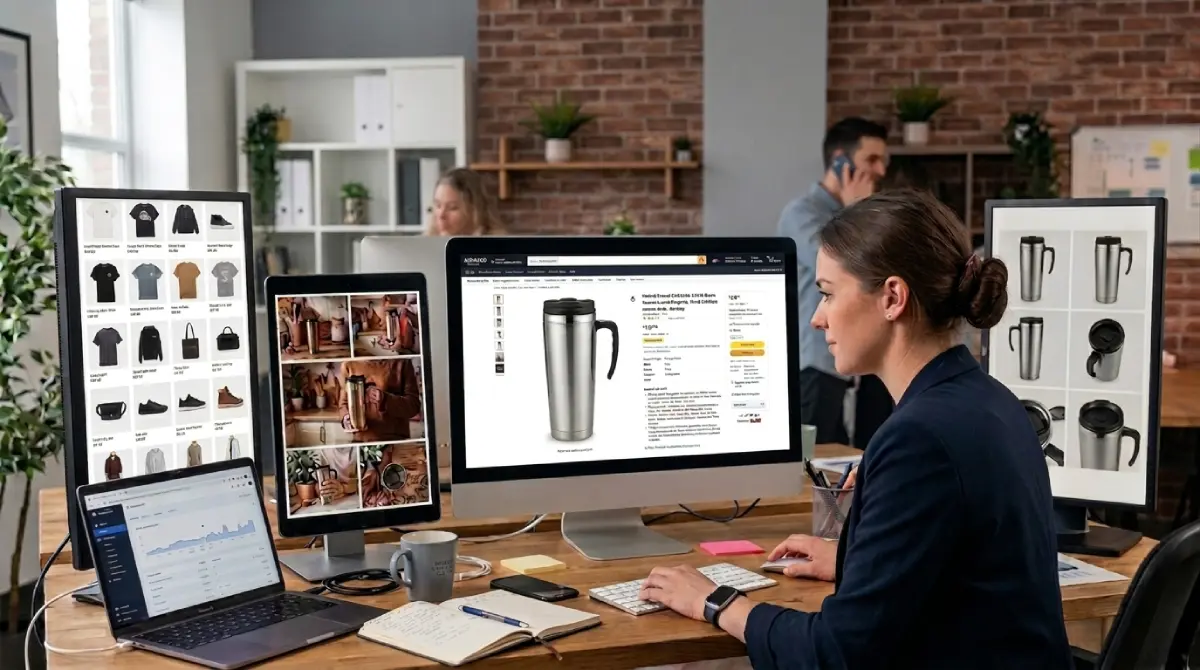
E-commerce standards are necessary for creating a professional and trustworthy online store. E-commerce platforms have some strict image standards to ensure consistency and fast loading performance. Meeting these requirements is necessary for better search visibility and higher conversion rates.
Amazon Image Requirements
As consistent and trustworthy product presentation is a top priority for Amazon, it has some of the strictest image requirements among all e-commerce platforms.
Since the main (hero) image is responsible for attracting clicks, it must strictly follow Amazon’s visual guidelines. The goal is a clear, accurate, and clean presentation of the product without distractions.
Key requirements include:
- Main image background must be pure white (RGB 255, 255, 255)
- The product should cover at least 85% of the frame for clear visibility
- No text, logos, or watermarks are allowed
- Minimal or no use of mannequins, props, or lifestyle settings in main images
- Minimum 1000 pixels on the longest side (2000+ pixels recommended for zoom)
Shopify Image Requirements
Although Shopify offers more creative flexibility than marketplaces like Amazon, product images still play a major role in building trust and driving sales. In Shopify stores, product visuals play a key role in shaping first impressions and buying decisions.
Key requirements include:
- Square format (1:1 aspect ratio) is recommended for consistent product grids
- Recommended resolution is around 2048 × 2048 pixels for high-quality zoom
- Maximum image size up to 5000 × 5000 pixels (20 MB limit)
- Supported formats include JPEG, PNG, WebP, SVG, and many more for optimized performance
- Images should be optimized for the web (smaller file sizes) to improve loading speed
- Consistent lighting, angles, and framing across all product images
Other Platforms
Platforms like Google Shopping, eBay, Etsy, and Walmart Marketplace each have their own image requirements, but all share the same goal: presenting products clearly and professionally to improve visibility and conversions. Regardless of platform, consistency and quality remain key.
Important prerequisites comprise:
- Google Shopping: Recommended 1500 × 1500 pixels, white or transparent background, no promotional text overlays.
- eBay: At least 500 pixels per side (1600+ recommended), up to 24 images, white background preferred.
- Etsy: Recommended minimum 2000 pixels, styled and lifestyle images perform well, focus on visual appeal.
- Walmart Marketplace: Similar to Amazon standards, minimum 2000 × 2000 pixels, white background, no watermarks or borders.
Across all platforms, maintaining high-resolution, consistent, and professionally presented images is essential for building trust and improving product performance.
Types of Product Photo Retouching Services
Product photo retouching services help to get clean and optimized images, which increase sales. There is a wide range of specialized product retouching services. All are designed to improve a specific aspect of an image. These services are necessary for professional product listing.
Key product photo retouching services include:
Background Removal & Replacement
The starting step in almost all product retouching tasks is background removal. It involves separating the product from its original backdrop. This process requires precision, using techniques like clipping paths or masking.
It focuses mostly on the complex items like jewelry, glass, or textured fabrics. The goal is to achieve clean, precise edge separation for a natural and accurate cutout.
Once removed, the background can be replaced with a white background for e-commerce, lifestyle scenes, or custom branded settings. This helps eliminate distractions and keeps the product as the main focus.
Color Correction & Consistency
The purpose of color correction is to ensure the product looks realistic and visually accurate. It fixes issues caused by inconsistent lighting, color casts, or exposure errors during shooting or editing.
This process adjusts white balance, contrast, saturation, and brightness to achieve a natural, balanced look. It also ensures consistency across all product images, which is especially important for multi-variant catalogs and helps reduce customer returns.
Shadow Creation
Shadow creation is used to add depth and realism to product images. It prevents products from looking flat or artificially cut out after background removal.
Different shadow types, like drop shadows, natural shadows, or reflection shadows, are applied based on the product and brand style. This helps ground the product visually and makes it appear more lifelike and professional.
Ghost Mannequin (Neck Joint)
Another name for the ghost mannequin service is the neck joint effect. It is commonly used in clothing photography. It focuses on removing the mannequin or model while keeping the product's natural shape.
Ghost Mannequin is usually done by combining multiple images to show the inner parts with a structured look. It helps present the product clearly without distractions and is widely used in fashion e-commerce.
High-End Retouching
High-end retouching is used for premium and luxury product presentations. The goal is to perfect every detail for a clean, flawless result.
This includes removing dust, scratches, and imperfections, smoothing surfaces, and correcting reflections or glare. This type of retouching is used for premium products that demand accuracy and superior visual quality.
AI-Assisted Retouching
The main purpose of AI-Assisted retouching is to maintain a large scale of product workflows. It helps speed up repetitive tasks such as background removal, color tone adjustments, and basic corrections.
This approach is ideal for high-volume e-commerce projects that prioritize consistency and efficiency. AI handles bulk processing, while human editors refine the final output to ensure quality and accuracy.
Product Photo Retouching Pricing Breakdown 2026
In 2026, the cost of product photo retouching widely depends on the product complexity and the volume. Here's an approximate cost breakdown of pricing tiers based on each level:
| Service Types | What's Included | Price (per image) |
| Basic Retouching | Cropping, resizing, exposure fixes, and simple color correction; ideal for bulk e-commerce listings and quick, high-volume edits | $0.30 - $2 |
| Standard Retouching | Background cleanup, improved color accuracy, and minor blemish removal; suitable for small catalogs and growing online stores | $2 - $6 |
| Advanced Retouching | Detailed cleanup, shadow creation, and texture refinement; best for apparel, electronics, and multi-angle product sets | $5 - $15+ |
| High-End Retouching | Pixel-level editing, reflection control, and premium finishing are used for jewelry, luxury products, and advertising campaigns | $10 - $100+ |
| Bulk/High-Volume | Streamlined edits using semi-automated workflows; designed for large catalogs (100+ images) requiring consistency at scale | $0.50 - $5 |
Who Needs Product Photo Retouching Services?
Product photo retouching service is necessary for any business that relies heavily on photo/product marketing. Businesses that attract and convert customers gain a strong advantage from professional photo editing.
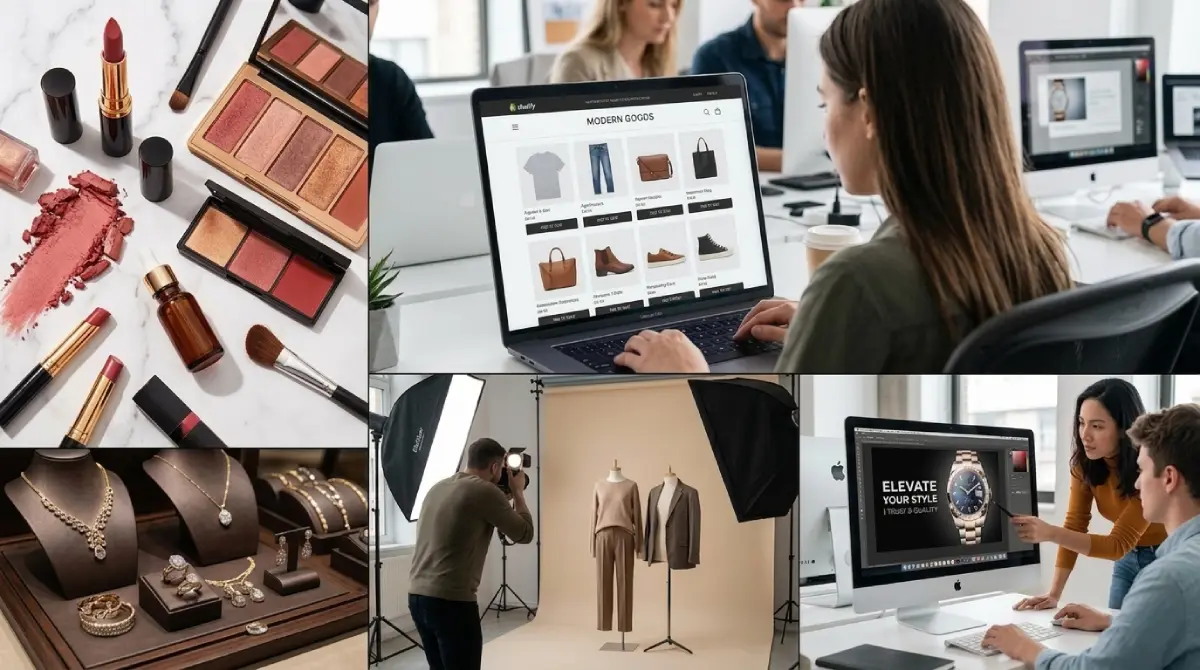
In e-commerce, it helps improve product listings, making them more appealing and competitive. Online marketplaces like Amazon, Shopify, eBay, and similar platforms see better engagement and higher sales when product images are clean, consistent, and professionally edited.
It is especially necessary for:
- E-commerce businesses: To improve product listings and increase conversions through clean, high-quality visuals.
- Fashion and apparel brands: To maintain a polished, consistent, and trustworthy presentation of clothing and accessories.
- Jewelry, cosmetics, and luxury goods: To enhance shine, texture, and fine details while reducing distractions like reflections or complex backgrounds.
- Advertising and marketing campaigns: To create visually strong, attention-grabbing images for promotions and brand storytelling.
- Small businesses and startups: To build customer trust and compete with larger brands through professional-looking product photos.
Across all industries, product retouching directly improves how products are perceived online. Businesses that invest in high-quality visuals often gain a strong advantage, as customers naturally prefer clearer, more professional-looking listings.
Final Thoughts
Product photo retouching has moved from okay-to-have to a basic requirement in digital commerce. Across platforms like Amazon, Shopify, and other online marketplaces, polished product images are essential for building trust and attracting customers.
Whether it is ghost mannequin work, shadow creation, color correction, high-end retouching, or AI-assisted editing, the purpose remains the same. Retouching helps remove distractions and ensures the product remains the main focus while strengthening overall brand identity.
As e-commerce continues to grow in 2026 and beyond, product photo retouching will become even more important to stay competitive. High-quality visuals directly impact customer trust, engagement, and sales performance.
Frequently Asked Questions
What is product photo retouching?
Product photo retouching is the post-production process. It focuses on making the photo clean, consistent, and sales-ready. It corrects the colors and lighting, cleans up the image, and makes it suited for ads or product catalogs for online stores.
How much does product photo retouching cost?
The cost usually depends on the product complexity and volume. Basic edits usually cost around $0.30 - $2 per image. On the other hand, advanced and high-end retouching ranges between $5 to 100+ per image.
What's the difference between background removal and clipping path?
Background removal means removing the background from an image, so the subject stands alone. A clipping path is a method used to do that by manually outlining the object in Adobe Photoshop. In short, background removal is the result, while clipping path is the technique.
Do I need white background retouching for Amazon?
Yes, Amazon has specific image guidelines for product listings. One of the key requirements is that the main product photo must have a pure white background (RGB 255,255,255).
Is AI retouching as good as manual retouching?
AI retouching is effective for basic works like background removal and resizing, but when it's about creative touch, manual retouching is necessary. It makes the image more accurate.
How to retouch product photos?
Steps for retouching product photos are background removal, removal of imperfections, color and light corrections, and shadow additions. Professionals usually use software like Photoshop for precise, high-quality results.
What file formats do I receive after retouching?
After photo retouching, most providers deliver images in JPEG and PNG formats. TIFF and WebP formats can also be provided depending on platform requirements.
How long does product photo retouching take?
Product photo retouching usually takes 5-60 minutes for basic adjustments. Delivery time is influenced by both the complexity of the work and the size of the order, typically ranging from a few hours to several days.