

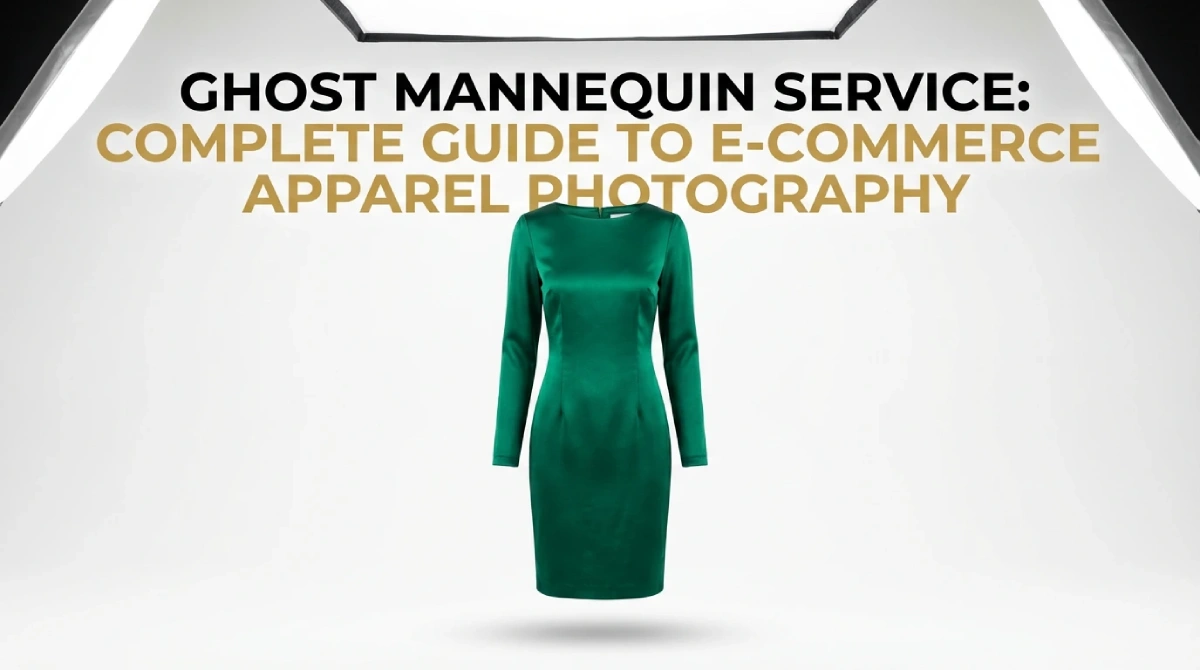
Ghost mannequin service is an essential solution for modern e-commerce brands. It transforms standard apparel photos into clean, 3D-like product images that clearly showcase a garment’s fit, shape, and structure.
This technique enhances product presentation and helps customers better visualize how the garment will look when worn, ultimately supporting more conversion-focused experiences. As the market continues to expand from $779.3 billion in 2025 to around $1.84 trillion by 2035, the importance of optimized visuals will only grow.
In this article, we will explain everything you need to know about the Ghost Mannequin Service. What it is, how it works step by step, different types of services, pricing breakdown, and shooting tips will be included. We will also go through platform requirements, garment-specific usage, and how to choose the right service provider.
What Is a Ghost Mannequin Service?
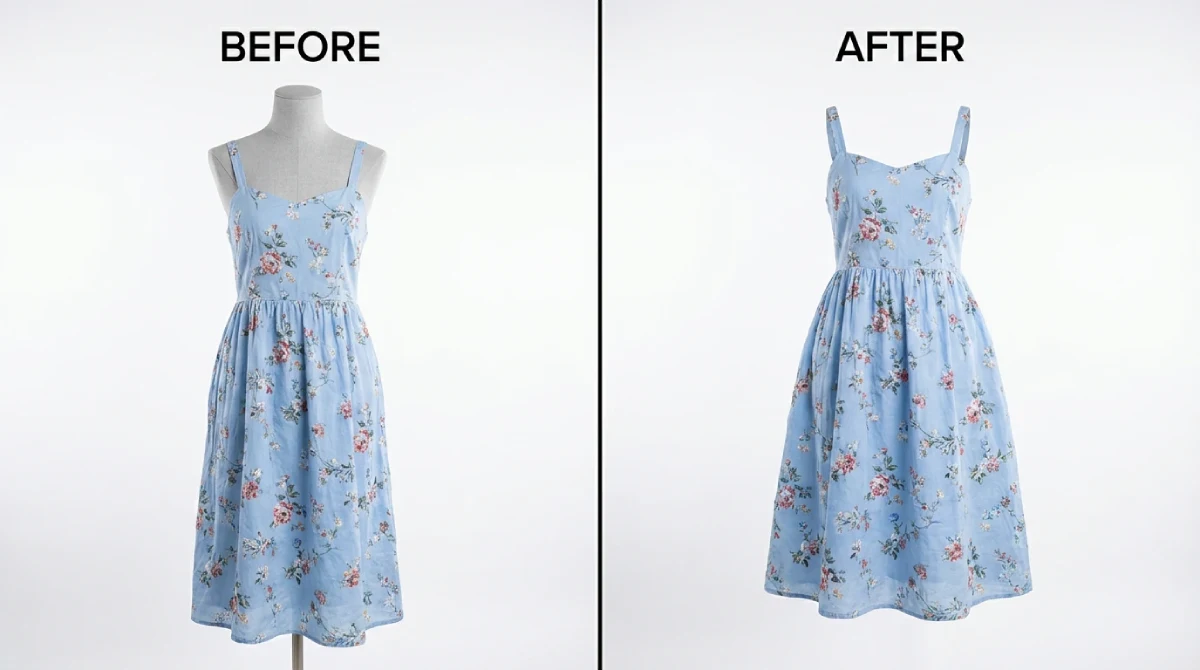
A ghost mannequin service is a post-processing photo editing process that is commonly used in e-commerce photography. It is also known as an invisible mannequin or hollow man effect.
It removes the mannequins or models from the apparel images and creates a clean product images that make the product appear as if it is naturally worn. It helps customers clearly see the garment’s fit, structure, and details.
Why Businesses Use Ghost Mannequin?
- Professional Look: Makes apparel appear polished and lifelike.
- Cost-Effective: Avoids expensive model shoots; mannequins are used during photography but removed later.
- Consistency: Maintains a consistent visual style across all product images for catalogs and online stores.
- Customer Confidence: Shoppers can clearly see how clothes fit and drape.
How Ghost Mannequin Service Works - Step by Step
Here’s step-by-step process on how ghost mannequin services work, including both the shooting and editing/post-production steps.
Step 1 - Shooting the Garment on a Mannequin (Front Shot)
The first step is to get the product ready for photography by placing it on a mannequin in the studio. The products are steamed or ironed before they are shot to get rid of wrinkles and make sure they sit normally.
The next step is for the photographer to take a clear front-facing shot with even lighting, typically by strategically placing soft boxes to soften the shadows. To help with post-processing, a neutral background, like white or grey, is usually used. For the finished ghost mannequin, this front image is the main base.
Step 2 - Shooting the Inner Neck/Label Area (Interior Shot)
On this step, a mannequin is dressed, and some of the parts are removed to shoot all the angles. All the details are captured, like the inner neck, collar, tags, and sometimes sleeve openings, or the bottom hem, depending on the garment.
These shots are essential because they fill in the gaps in the final image once the mannequin is removed. Without them, the final image will look very flat and unrealistic.
Step 3 - Background Removal & Clipping Path
After the shooting, image post-processing is the next step. On this step, the editors import the photos into post-processing software. The basic editing starts by removing the background. A clean background is essential to achieving a seamless final image, so editors use the pen tool to draw a clipping path along the edge of the garment to then remove the background.
Once this is done, the background is removed, so only the product is left on a clear or new background. This is the first step of many in a process that requires many layers and a lot of advanced compositing.
Step 4 - Neck Joint Compositing in Photoshop
This is the most important step of the ghost mannequin effect. The editor has to carefully remove the mannequin from the image, all while preserving the product's shape. After that, the editor slides the label or inside neck photo beneath the neckline.
The next step is a meticulous layering process that makes the product's inner appear seamless, as if it had always been there. Instead of placing clothing on a physical body, this makes the product look more lifelike and tailored to the wearer's aesthetic. This process is known as neck joint compositing.
Step 5 - Wrinkle Removal, Color Correction & Retouching
This is one of the most critical steps in ghost mannequin service. On this stage, the final adjustments are made to ensure the photo looks as professional as the product. Wrinkles, dust, lint, and imperfections are all taken out of the photo.
Then, the color correction of the garment is adjusted to ensure consistency across the product photos of the catalogue. To ensure realism, adjustments are also made to brightness, contrast, and shadow. The main goal is to make sure the final product image looks professional and ready for use.
Step 6 - Final QC & Export
At this point, the photo is subject to one final quality control check. The goal is to make sure that all the visual elements are properly aligned and consistent. Small final edits are made, such as correcting blend and edge problems.
The edited image is exported to the appropriate file type, which, depending on the need, can be JPEG, WebP, or PNG, as well as e-commerce optimized for platforms such as Amazon or Shopify. The goal is to ensure quality without sacrificing loading time.
Types of Ghost Mannequin Services
There are different types of ghost mannequin services that are used depending on the clothing category and the level of detail required for the presentation. The core types of Ghost Mannequin services include:
Neck Joint Service
Editors working on neck joint services concentrate primarily on the neckline and collar area. To enhance the depth of the neckline and collar area, the editors are required to show photos of the back cut.
This produces a strong hollow effect, which is a widely adopted approach across various types of necklines in shirts, T-shirts, hoodies, sweaters, and jackets.
Bottom Joint Service
The bottom joint service reconstructs the lower parts of the garments after mannequins are removed.
To fill the void, editors insert images of the interior cut of the hem or the lining of the garment, helping achieve the natural length and drop of the garment. This is applicable to dresses, skirts, trousers, and long coats.
Sleeve Joint Service
The sleeve joint service is focused on the sleeve parts of the garments. Editors capture sleeves separately and integrate them into the main image with perfect finishing.
This service is especially useful for shirts, jackets, blazers, and coats, where the sleeve cut and construction play a significant role.
3D Ghost Mannequin Effect
The 3D floating ghost mannequin service is an exclusive, fully advanced service. On this point, multiple joints (neck, sleeve, and bottom) are seamlessly combined.
After a full reconstruction of all insides of a garment, the service expertly showcases the illusion of depth to high-end premium fashion, luxury catalogue, or grade e-commerce websites.
Symmetrical Ghost Mannequin
Based on symmetry and balance principles, this service, symmetrical ghost mannequin, focuses on the shoulder, sleeve, body, and garment shape alignment to ensure balance.
It is ideal for precision and even balance suits and blazers with professional and sophisticated attire. This service is best for formal and structured clothing.
2D Ghost Mannequin (Flat Lay Style)
The 2D ghost mannequin, also known as Flat Lay style. It employs a ghost mannequin service for garments that lie flat (photographed). Editors enhance the image with a slight 3D effect to create depth and structure.
The result is a more simplistic effect than the full mannequin-edited images. It is typically for basic product listings and is a more budget-friendly option where reshoots aren’t possible.
Ghost Mannequin Service Pricing - Full Breakdown 2026
Ghost mannequin service pricing mostly depends on the level of editing. It's also based on the product, complexity, and whether the work is done manually or by using AI tools. Here's a clear breakdown of the pricing by service tier and how it compares to traditional live model photography.
Pricing by Service Tier
| Service Tier | Features | Best used Category | Pricing |
| Basic AI Ghost Mannequin | Automatic mannequin removal, basic 3D effect | Large catalogues, low-budget brands | $0.20 – $0.50 |
| Standard Neck Joint Editing | Neck joint, basic retouching, color correction | T-shirts, shirts, trousers | $0.50 – $1.50 |
| Advanced Manual Editing | Sleeve + bottom joints, full compositing | Jackets, blazers, structured garments | $1.50 – $3.00 |
| Premium / Complex Editing | Multi-layer compositing, high-end retouching | Luxury fashion, outerwear, suits | $3.00 – $5.00+ |
| Full-Service Studio Package | Photography + editing + retouching | Brands without an in-house setup | $15 – $75+ |
Cost Comparison: Ghost Mannequin vs Live Model Photography
| Factors | Ghost Mannequin Service | Live Model Photography |
| Cost per image | $0.29 – $5+ | $25 – $75+ |
| Setup requirements | Minimal (photo + editing) | Studio, model, stylist, crew |
| Turnaround Time | 24–48 hours (or minutes with AI) | 2–7 days |
| Scalability | High (ideal for bulk catalogues) | Limited (depends on model availability) |
| Consistency | Very consistent look | Varies by model and shoot conditions |
Ghost Mannequin Service vs Flat Lay Photography
Ghost mannequin and flat lay photography are two widely used techniques in e-commerce. So, choosing the right product photography style plays a major role in how customers are going to perceive your brand. Here's a key comparison between these two to help you decide which one fits your needs:
| Aspect | Ghost Mannequin Service | Flat Lay Photography |
| Visual Style | 3D invisible body effect showing natural garment shape | 2D top-down view of clothing laid flat |
| Fit and Realism | High clearly shows structure, fit, and drape | Low sense of fit or body shape |
| Production Complexity | Fashion apparel like shirts, jackets, dresses, suits | Simple items like t-shirts, accessories, casual wear |
| Post-production work | Higher (mannequin + multi-angle shooting + editing) | Lower (single setup, simple shooting) |
| Cost | High (mannequin removal, compositing, retouching) | Low (basic cropping and color correction) |
| Customer Impact | Higher due to setup and editing effort | Lower and more budget-friendly |
| Best use | Stronger purchase confidence and a premium look | Good for simple browsing and quick listings |
Ghost Mannequin by Garment Type
Online stores use ghost mannequin photos to show off clothes in a neat, organized, and professional way. The mannequin is digitally removed, but the clothes' natural shape is kept.
Different types of clothing need different ways to be shot and edited based on the type of fabric, structure, and level of detail needed. Some of the common ghost mannequin garment types are:
T-Shirts & Casual Tops
T-shirts and other casual tops are simple clothes that only need a clean neck joint to show off the collar and brand name. They're normally shot on a torso mannequin so that you can see the front, back, and inside of the neck.
Because of their light structure, only minimal shape correction is needed in editing. Based on this, they are among the garments that can be processed quickly and most easily.
Best for: Basic e-commerce stores, bulk apparel listings, and everyday fashion catalogues.
Jackets, Coats & Outerwear
Due to their thick and stacked construction, outerwear clothes need more advanced shooting skills. For correct compositing, the inner lining, collar structure, sleeves, and hem must all be recorded separately.
If you want your post-mannequin shots to look realistic and full-body, you'll need to use multiple camera angles. Editors try to keep the structure while not changing the natural shape of the image.
Best for: Premium fashion brands, winter wear, and structured outerwear collections.
Dresses & Formalwear
To keep dresses' natural shape and flow on the mannequin, they need to be styled carefully. To recreate the entire garment in post-production, it is necessary to take photographs of the inside of the neck and the hem.
Maintaining volume may necessitate padding or support, depending on the design. The end product needs to have a balanced, smooth, and weathered appearance.
Best for: Formalwear brands, boutique fashion, and occasion wear collections.
Swimwear & Lingerie
Swimwear and lingerie are very delicate items of clothing that need to be handled carefully while being filmed. Small parts like straps, lace ends, and elastic bands need to be placed carefully so they don't get messed up.
To keep the exact look of the fabric, you need soft, even lighting. Since there isn't much cloth and the edges are very sharp, editing needs to be very detailed.
Best for: Intimate apparel brands, swimwear labels, and high-detail fashion catalogues.
Sportswear & Activewear
Activewear, Sportswear, and their associated fashion needs a lot of precision. The materials that clothing is made of determine how close to the body the clothing can fit and how stretchy it is.
Care is required to make sure that seam lines, technical features, and mesh panels remain visible. Sizing for mannequins is important. Care during shooting also includes how consistent the lighting and position are supposed to be.
Best for: Fitness brands, athleisure labels, and performance clothing lines.
Childrenswear
To keep proportions and fit accurate, children's wear requires mannequins of the appropriate sizes. Product details in children's clothing, such as snaps and prints, need proper lighting to capture them.
Since children's clothing is small, photography has to be meticulously done. The end image should be clean, balanced, and well-lit.
Best for: Kids wear brands, baby clothing stores, and school uniform suppliers.
Platform-Specific Requirements for Ghost Mannequin Images
Different platforms require different kinds of guidelines, and it is essential to follow them if you want your product listings to look professional. Adapting these requirements makes sure your images are not only visually appealing but also compliant for optimized conversions.
Amazon Ghost Mannequin Requirements
Amazon has some strict rules for ghost mannequin images. The background of the main picture has to be pure white (RGB 255,255,255), and the object has to take up at least 85% of the frame. To achieve a flawless ghost appearance, remove the mannequin, hangers, and any other supports.
Images need to have a minimum of 500 pixels and maximum of 10,000 pixels on the longest side. The main picture can't have any writing, logos, or props in it. To keep things from looking flat or unrealistic, you can keep the lighting uniform and add a small natural shadow.
Shopify Ghost Mannequin Best Practices
Although Shopify has less stringent image guidelines than Amazon, consistency and visual clarity remain essential for strong brand presentation. To maintain a clean and professional storefront, use a white or light gray background and opt for square images at 2048 × 2048 px, which work best for product grids and zoom functionality.
Even without strict enforcement, keeping alignment, spacing, and lighting consistent across all listings helps create a cohesive visual identity, strengthening brand trust, and enhancing the overall shopping experience.
A case study from DueMaternity showed that implementing 360° product views increased conversion rates by 27%, reinforcing how improved product visualization directly impacts performance.
Social Media (Instagram, Pinterest)
Social platforms prioritize scroll-stopping visuals over technical compliance, so presentation matters more than specifications. On Instagram, square or portrait-format ghost mannequin images (1080 × 1080px or 1080 × 1350px) perform best in both feed and shop tabs.
Pinterest favors tall, vertical images (1000 × 1500px or 2:3) that stand out in search results. Use clean backgrounds, but don't be afraid to incorporate subtle lifestyle context or branded color palettes; both platforms reward aesthetic cohesion over sterile product shots. Consistent editing style across posts also strengthens grid appeal and brand recognition.
Final Thoughts
The ghost mannequin service is an important part of modern e-commerce because it shows products in a clean, organized, and lifelike 3D form. It lets buyers see fit, shape, and details more clearly without any other information getting in the way. This makes product images look more professional and focused on conversion.
When used with proper shooting techniques, garment-specific editing, and correct platform formatting, it greatly improves the overall quality of product catalogues. Choosing the right service provider also ensures consistent quality and fast delivery. It also helps your business scale smoothly as it grows.
Overall, ghost mannequin photography isn't just a way to edit photos; it's an important part of building trust. It makes the product look better and increases brand identity in online markets that are very competitive.
Frequently Asked Questions
What is a ghost mannequin service?
In simple terms, the ghost mannequin service refers to an editing process that removes the mannequin or model from images. The result is a clean 3D image that shows how the clothing fits and shapes the body.
How much does ghost mannequin editing cost per image?
Based on complexity and need, the cost of ghost mannequin photo editing varies, which is roughly around $0.50 to $5 per image. Simple edits usually cost less; on the other hand, detailed and layered clothing costs more.
What is the difference between a ghost mannequin and an invisible mannequin?
Ghost mannequin and invisible mannequin are interchangeable terms. The nuance is that ghost mannequin highlights the editing process, while invisible mannequin refers to the shooting setup. Both create the same clean, 3D garment look.
How does the neck joint service work?
On neck joint service, the editors usually merge multiple shots and then combine them to get a better, more complete, smooth, and natural look.
How long does ghost mannequin editing take?
The basic ghost mannequin editing usually takes 1-3 hours. Based on the complexity and detailed work, it can take up to 24-48 hours.
Can I use AI tools for ghost mannequin editing?
The answer is Yes. You can use AI tools for ghost mannequin editing for basic editing parts. However, for the clean, natural, and accurate result, manual editing still works the best.
What images do I need to send for ghost mannequin editing?
For ghost mannequin editing, a professional usually requires front and back shots of the mannequin. Inside shots of the neck or collar area are also necessary to get a polished, high-quality professional image.
Is ghost mannequin better than flat lay photography?
Ghost mannequin photography is better for e-commerce for a 3D, high-end, realistic look. On the other hand, flat lay works better for showing fabric, texture, and simple styling. Many brands apply both methods based on the specific product.
Which garments benefit most from ghost mannequin service?
Clothes like t-shirts, shirts, coats, skirts, and suits are the ones that benefit most from the ghost mannequin. The form and structure of these items must be represented clearly.
Can the ghost mannequin service handle bulk orders?
Yes. Ghost mannequin services are structured to handle high-volume orders. Most of the providers are set up for bulk work and process larger catalogues and offer discounts on higher volumes.